
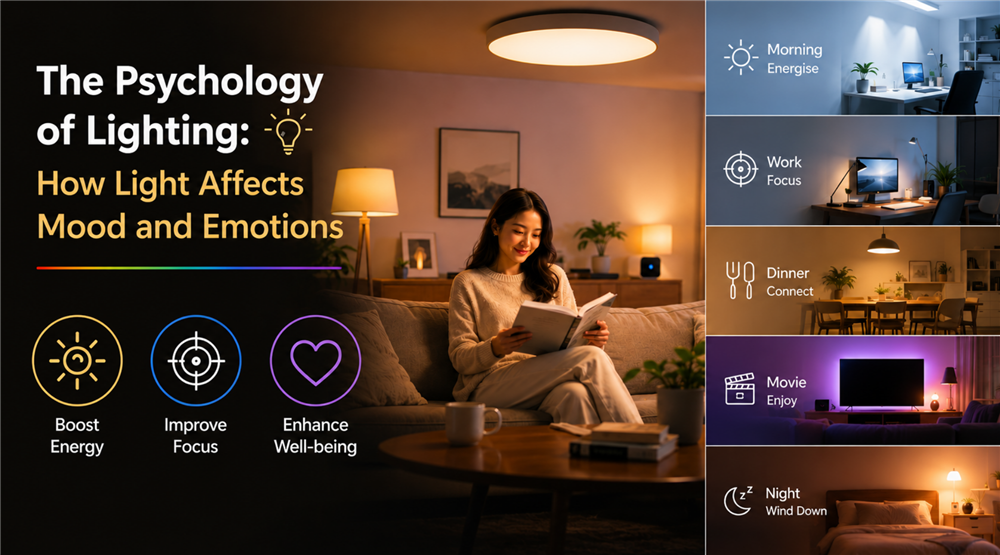
The Psychology of Lighting: How Light Affects Mood and Emotions
Lighting heavily affects the atmosphere of a room, thus it can change how a space feels. For instance, brighter and cooler lighting makes us feel more productive and supports focus, while warmer lighting creates a more relaxed atmosphere. In Malaysia, where most homes use the same space for multiple purposes, the right lighting can suit the mood for any activity there.
1. Why does lighting affect how we feel?
Light is an important environmental signal to our brains. Light exposure helps to regulate the body’s circadian rhythm, an internal clock that runs on a 24-hour cycle and affects sleep and wakefulness. So the light around you can influence how awake, relaxed or ready for sleep you feel. Two different lighting brightness and color make up very different feelings.
2. Does warm lighting make a room feel more relaxing?
Warm lighting, which is around 2700K to 3000K, makes a room relaxing with a comfortable ambiance, making it suitable for rooms that are mainly for resting, such as bedrooms, living rooms or dining areas. While cooler lighting, which is around 4000K to 6500K supports productive areas such as the office.
3. Is cool white light better for productivity?
Cool and bright lighting makes a space more energetic and productive, which is best being used when doing work, studying or completing detailed tasks. For instance, a home office when doing work is best using cool lighting, but when it’s time to relax after work, warm lighting supports relaxation, which makes smart lighting flexible in this situation.
4. Can lighting affect sleep?
Yes. Lighting sends signals that regulate the body’s internal clock, which is why bright light at nights makes it difficult for the body to sleep. Thus, it is better to use dimmed warm lighting before sleeping for a better sleeping routine. Slowly reducing the brightness at night as bedtime approaches makes sleeping easier.
5. Can coloured lighting change the atmosphere of a room?
Yes, coloured lighting makes the visual mood of the space change dramatically. Colourful RGB lighting, which is always known as gaming lighting makes the room more playful for gaming, movie nights or celebrations such as birthday parties. They are best used to add colour to the room, not used as the main lighting as they cannot lit the room properly.
Why Psychology of Lighting Matters
Malaysia’s climate allows a lot of natural sunlight during the day, but our indoor lifestyle also continues after the sun has already set. Thus, the home needs to suit different activities at night, such as working, studying or even watching movies.
- Multi-purpose rooms: In Malaysia, the dining table is often used as a space to eat, or doing work when working-from-home. Thus, it is important to have smart lighting to suit different activities, which is warm lighting for eating, and cool lighting for working.
- Evening Gatherings: Malaysians often spend their evening gathering with family and friends. Thus, warm lighting can be used to create a welcoming atmosphere for having a conversation and meals.
- Heavy Rain: Rainy days and dark skies make the indoors of your home significantly dark, thus having lighting that can have their brightness adjusted to your needs can be flexible without making the indoors too bright.
Real-Life Use Cases
- From Working to Relaxing Mode: After working with cool lighting to stay productive at your dining table, you can easily set them to warm lighting with smart lighting when you’re about to have lunch or dinner for a more relaxing mood.
- Create a Cozy Bedroom: Instead of using the same white lighting when you wake up or during bedtime, use dimmed warm lighting in the evening to have a softer lighting to make the bedroom more comfortable for sleeping.
- Setting the Mood for Movie Nights: Making the room completely dark during movie nights can strain the eyes, thus having low brightness ambient lighting near the TV or around the room can create balanced lighting that is comfortable for the eyes.
Tips & Best Practices
- Match Lighting With Activity: Know what you do in every space in your home. For instance, you may use the kitchen as a cooking and dining area. Thus having lighting that can adjust from white to warm lighting makes it suitable for both activities.
- Layer Your Lights: By layering different lighting types, such as task, ambient, and accent lighting, you can create a more balanced space that is cozier by reducing harsh shadows, making it comfortable for the eyes.
Common Mistakes
- Using The Brightest Lighting All The Time: Using the maximum brightness lighting from morning until night can make the room uncomfortable and harsh at night. Instead, you can adjust the brightness and colour based on the activity you’re doing.
- Choosing Lighting Based on Appearance: Good lighting is not only about the design. Brightness, colour temperature, automation features, and room usage affect the overall lighting experience, thus picking the one that is most suitable for your space is important.
The Yeelight Advantage
Modern smart lighting brands such as Yeelight offer a wide range of lighting solutions that can help your home adapt to your mood. From warm, relaxing lighting for quiet evenings to brighter, cooler settings for work and focus, you can create different atmospheres without changing your home's setup.
Yeelight Smart Lighting gives homeowners the flexibility to personalise their lighting through adjustable brightness, colour temperature and smart scenes. Whether you want your living room to feel cosy after a long day or create a more vibrant atmosphere for movie night, the right lighting can help your space feel the way you want it to.
Smart Lighting vs Normal Lighting: Which Is Better for Your Mood?
| Features |
Normal Lighting |
Smart Lighting |
|
Mood flexibility |
Usually stays at one colour and brightness. |
Adjust brightness, colour temperature and colour on supported models. |
|
Relaxation |
Requires manually changing or switching lights. |
Create a warm, dim setting for relaxing. |
|
Focus |
Usually uses the same light throughout the day. |
Switch to a brighter, cooler setting for work or study. |
|
Entertainment |
Atmosphere depends mainly on your existing fixtures. |
Create colourful or dim ambient scenes for movies, gaming or gatherings. |
|
Night-time routine |
Lights are usually switched on or off manually. |
Schedule lights to gradually change or turn off at set times. |
How to Get Started With Mood-Based Lighting
1. Start With One Room: Choose one room where you spend a lot of time, such as your bedroom, living room, study or dining area. Starting with one space makes it easier to experiment with different brightness levels and colour temperatures.
2. Identify the Moods You Want: Think about how you want the room to feel at different times of the day. This gives you a clearer idea of the lighting settings you actually need instead of choosing colours simply because they look good.
3.Choose the Right Colour Temperature:
-
2700K–3000K: Warm and cosy, suitable for relaxing, dining and bedrooms.
-
3500K–4000K: Neutral and balanced: suitable for kitchens, living areas and everyday activities.
-
5000K–6500K: Cool and bright, suitable for focused tasks such as studying or working.
4. Adjust Brightness, Not Just Colour: Brightness has an equal effect on how a space feels. Keeping your lights bright when you need to concentrate and gradually lowering the brightness when you want to relax.
5. Create Different Lighting Scenes:
- Work Mode: Clear and bright lighting designed to make your workspace feel focused.
- Dinner Mode: Warm and soft lighting to create a relaxed atmosphere for dining.
- Movie Mode: Dim ambient lighting or subtle colours to add atmosphere without making the room completely dark.
6. Expand to Other Rooms: Once you find a setup that works, apply the same approach to other areas of your home. You could create a calming bedroom, a focused study room, a welcoming dining area and a more immersive entertainment space — all without changing the basic layout of your home.
Final Thoughts
The psychology of lighting means there is no one perfect color or brightness for all. It’s more about understanding how light works with your routine and choosing lighting that supports how you actually live. Smart lighting means your home doesn’t have to look the same at 8am or 10pm.
Ready to Upgrade Your Home?
Explore smart lighting solutions or get a Free Lighting Proposal Plan tailored to your home setup by scheduling a visit to the Copper Connect showroom! Our lighting experts will guide you in designing the perfect smart lighting setup that fits your home perfectly.